It wasn’t long into the pandemic before people noticed—and researchers confirmed—that COVID-19 outcomes were disproportionately worse in certain communities. Since then, much study has been devoted to parsing the data to measure the effects of the virus on different populations and determine why and how the consequences could be so different across a variety of groups.
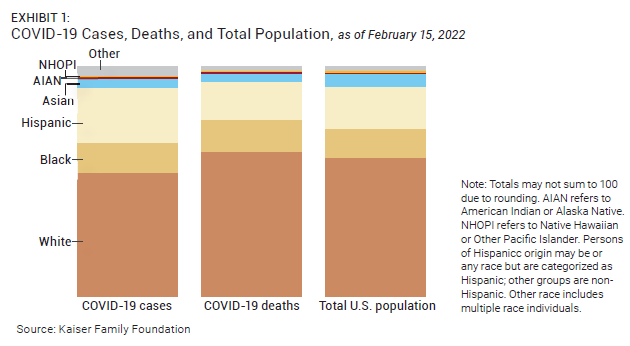
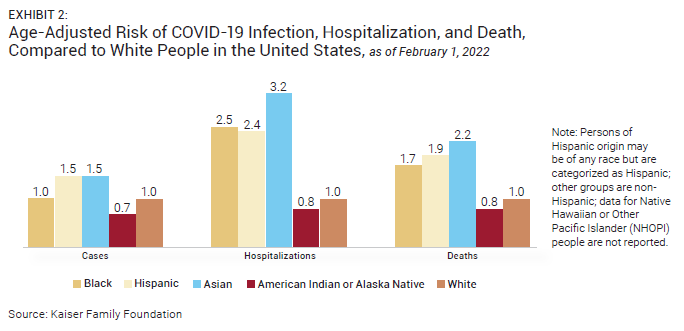
Indeed, cumulative data over time show persisting disparities in cases for Hispanic people and deaths for Black people (see Exhibit 1). The disparities become clearer when adjusted for age, which is important because risk of infection, hospitalization, and death varies by age, and age distribution differs by racial and ethnic group. In addition, disparities widened and narrowed over the course of the pandemic but were the most evident early on (see Exhibit 2). For example, as of November 30, 2020, Hispanic, Black, and American Indian and Alaska Native (AIAN) people were almost 3 times as likely to die from COVID-19 and about 4 times as likely to be hospitalized as White people.1